Heat Lamp vs Ceramic Heat Emitter for Bearded Dragons
Heat lamp vs ceramic heat emitter for bearded dragons: which gives light, which is for night heat, when you need each, and how to run them safely on a thermostat.
Heat lamp or ceramic heat emitter? It is one of the most common questions new bearded dragon keepers ask, and the answer is simpler than it sounds: they do different jobs. A basking bulb gives heat and light for the day, a ceramic heat emitter gives light-free heat for cold nights, and many dragons never need the emitter at all. This guide explains exactly what each one does, when you need it, and how to use both safely.
Heat Sources Compared

REPTI HOME Reptile Basking Spot Bulb (100W, 2 pack)
Daytime heat plus bright white basking light, the everyday workhorse.

LUCKY HERP Ceramic Heat Emitter (100W)
Light-free heat for cold nights, runs on a thermostat.
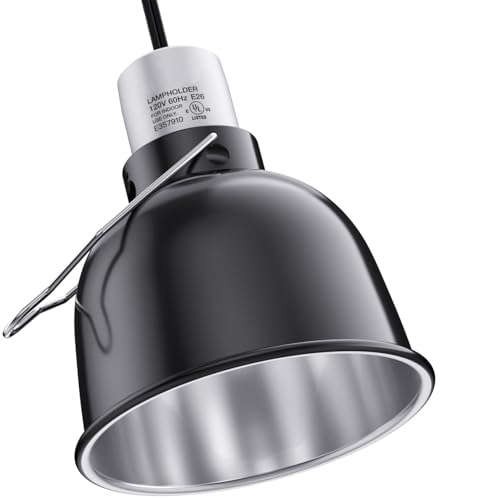
MRREPTILE Dome Lamp Fixture with Ceramic Socket
Ceramic-rated dome required to safely hold a heat emitter.
As an Amazon Associate we earn from qualifying purchases at no extra cost to you. Feeding and supplement guidance here is researched care information, not veterinary advice; confirm dosing with a reptile vet.
What each device actually does
The key difference is light. One produces it, one does not.
| Feature | Heat lamp (basking bulb) | Ceramic heat emitter |
|---|---|---|
| Produces heat | Yes | Yes |
| Produces visible light | Yes (bright white) | No |
| Produces UVB | No | No |
| Primary use | Daytime basking | Nighttime heat in cold rooms |
| Fixture needed | Standard dome | Ceramic-socket dome |
| Run on a thermostat | Yes (dimming ideal) | Yes (essential) |
The heat lamp: your daytime basking source
A heat lamp, more precisely a white basking bulb, is what creates your dragon's basking spot during the day. It delivers the focused warmth that brings the basking surface to 95 to 110 degrees Fahrenheit, and just as importantly it provides bright visible light. Bearded dragons are diurnal desert animals that need a clear, bright day to set their internal clock, drive appetite, and bask naturally. A ceramic emitter cannot do this job because it produces no light.
Note that a basking bulb provides heat and light but no UVB. You always pair it with a separate T5 HO 10.0 UVB tube positioned over the same basking spot.
The ceramic heat emitter: light-free night heat
A ceramic heat emitter screws into a fixture like a bulb but glows no light at all, radiating only heat. That makes it the right tool for one specific job: keeping the enclosure warm at night when your room gets too cold, without disturbing your dragon's sleep with light. Because it emits no light, it would never be used as a daytime basking source.
Bearded Dragon Care Planner
Track your bearded dragon's health, meds, vet visits, mobility, nutrition, and quality of life, all in one printable planner.
Does your dragon even need a ceramic heat emitter?
Often, no. A healthy bearded dragon benefits from a natural nighttime temperature drop into the 65 to 75 degree range, which mirrors the cool desert night. Most homes stay comfortably within that range overnight, meaning no supplemental heat is needed at all. You only need a ceramic heat emitter if your room genuinely falls below about 65 degrees at night, for example an unheated room in winter.
Before buying one, measure your room temperature overnight for several nights with a digital thermometer. If it holds above 65 degrees, skip the emitter. If it dips lower, a CHE on a thermostat is the correct solution, never a light-emitting or colored bulb.
Using a ceramic heat emitter safely
Ceramic emitters run extremely hot, far hotter than ordinary bulbs, so safety matters:
- Use a ceramic-rated dome fixture. The socket must be ceramic and rated for the emitter's wattage. A plastic socket can melt and become a fire hazard.
- Always run it on a thermostat. A CHE with no thermostat can overheat the enclosure. A thermostat holds a safe target and shuts the emitter off when the tank is warm enough.
- Mount it securely and out of reach. Position it so your dragon cannot make direct contact and so it cannot fall into the enclosure.
- Verify with a thermometer. Confirm the overnight enclosure temperature stays in the safe range.
What about halogen and mercury vapor bulbs?
These come up often in the same conversation. A halogen bulb is simply an efficient type of basking bulb, producing heat and bright white light like a standard heat lamp, often with longer life. A mercury vapor bulb is an all-in-one that combines heat, light, and UVB, a niche option for large or tall enclosures, but it cannot run on a thermostat and gives a narrow UV column. Neither replaces the ceramic heat emitter's specific role of light-free night heat.
Bottom line
- Daytime heat and light: use a white basking bulb (heat lamp).
- UVB: always a separate T5 HO 10.0 tube, regardless of heat source.
- Nighttime heat, only if the room drops below 65°F: use a ceramic heat emitter on a thermostat.
- Never use any light-emitting or colored bulb at night.
- House a ceramic emitter in a ceramic-rated dome and run it on a thermostat.
Match the tool to the job and your dragon stays warm by day, rests in the dark by night, and is never exposed to a fire risk or a disrupted sleep cycle. When in doubt about your specific room and setup, a reptile vet or experienced keeper can help you decide whether you need the emitter at all.
Editor's Pick · Affiliate link
A T5 10.0 UVB Fixture, the One Thing You Cannot Skip
Metabolic bone disease is the most common preventable illness in captive bearded dragons, and it comes down to inadequate UVB. A linear T5 tube across the basking side does what a coil bulb cannot, and the tube needs replacing roughly annually even when it still lights up.
Frequently Asked Questions
What is the difference between a heat lamp and a ceramic heat emitter?
A heat lamp, or basking bulb, produces both heat and bright white light, making it the daytime basking source for a bearded dragon. A ceramic heat emitter, or CHE, produces only heat with no light at all. The CHE is used for supplemental warmth, especially at night when light would disrupt sleep. In short, the basking bulb is your day heat plus light, and the ceramic emitter is light-free heat for cold nights.
Which should I use for daytime basking?
Use a white basking bulb, not a ceramic heat emitter, for daytime basking. Bearded dragons need bright light during the day to set their day-night rhythm and to bask the way they would under the sun, and a basking bulb provides both the heat and that visible light. A ceramic emitter gives heat without light, so it cannot create a proper daytime basking environment on its own.
When should I use a ceramic heat emitter?
Use a ceramic heat emitter mainly for nighttime heat when your room genuinely drops below about 65 degrees Fahrenheit. Because it gives off no light, it warms the enclosure without disturbing your dragon's sleep. Always run a CHE on a thermostat to hold a safe, steady temperature, and house it in a ceramic-rated dome fixture, since these emitters get extremely hot and can melt plastic sockets not designed for them.
Do most bearded dragons even need a ceramic heat emitter?
Many do not. Most homes stay above 65 degrees at night, and a nighttime drop into the 65 to 75 degree range is healthy for bearded dragons, mimicking the desert. A ceramic heat emitter is only necessary when your room genuinely falls below about 65 degrees overnight. If you are unsure, measure your room temperature at night for a few days before buying one, and add it only if the readings call for it.
Can I leave a heat lamp on at night?
No. A light-emitting basking bulb left on at night disrupts your dragon's sleep cycle, and colored night bulbs are also visible to dragons and not recommended. Turn off all light-emitting bulbs at night and let the tank cool. If your room is too cold, use a non-light ceramic heat emitter on a thermostat for warmth, which provides heat without the disruptive light.
What fixture do I need for a ceramic heat emitter?
A ceramic heat emitter must go in a dome fixture with a ceramic socket rated for the emitter's wattage, because CHEs run far hotter than standard bulbs and can melt plastic sockets. Use a deep, sturdy dome and mount it securely above the enclosure. Always pair the emitter with a thermostat so it cannot overheat the enclosure, and keep it positioned so your dragon cannot make direct contact.
Are mercury vapor and halogen bulbs the same as these?
No. A halogen bulb is a type of efficient basking bulb that produces heat and white light, similar in role to a standard basking lamp. A mercury vapor bulb produces heat plus UVB and light in one unit, a niche all-in-one option. A ceramic heat emitter produces only heat and no light or UVB. Each serves a different purpose, so choose based on whether you need light, UVB, or light-free warmth.
Need more help with your bearded dragon?
Browse our guides by topic to find practical solutions.
Wellness Planner: $39