Bearded Dragon UVB Lighting: Complete Guide
Everything you need to set up UVB lighting for a bearded dragon: T5 HO 10.0 bulbs, fixtures, distance, replacement timing, and how UVB prevents metabolic bone disease.
UVB lighting is the single most important piece of equipment in a bearded dragon's enclosure, and it is also the one most often set up wrong. A dragon kept warm and well fed but without proper UVB will slowly develop metabolic bone disease, a painful and often fatal condition. The good news is that getting UVB right is simple once you understand a few rules: use the correct bulb type, mount it correctly, set the right distance, and replace it on schedule. This guide walks through all of it.
UVB Lighting Essentials

Zoo Med T5 HO ReptiSun 10.0 UVB Lamp (2 pack)
The standard desert-strength UVB tube most experienced keepers trust.
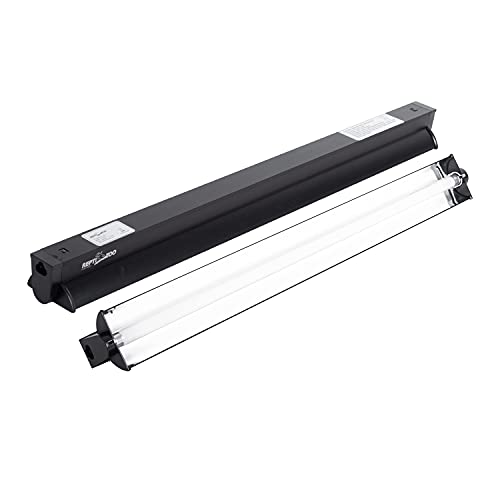
REPTI ZOO T5 HO 10.0 UVB Fixture + Bulb Combo Kit
Reflective hood and 10.0 tube together, ready to mount on a 24 inch tank.

REPTI ZOO REPTI ZOO 22" T5 HO 10.0 UVB Bulb (24W)
Replacement desert tube sized for a standard 36 inch enclosure.

Arcadia T5 UVB Light Fixture Kit, 22.5" 24W 12% Desert
The enthusiast-grade Arcadia fixture and 12 percent desert tube, a step up in output and lifespan.
As an Amazon Associate we earn from qualifying purchases at no extra cost to you. Feeding and supplement guidance here is researched care information, not veterinary advice; confirm dosing with a reptile vet.
Why bearded dragons need UVB
Bearded dragons come from the sun-drenched scrublands of Australia, where they bask for hours under intense desert sun. That sunlight contains UVB radiation, which their skin uses to manufacture vitamin D3. Vitamin D3 is what allows the body to absorb dietary calcium. Without UVB, even a dragon eating a calcium-rich diet cannot use that calcium properly, and the body starts pulling minerals from the skeleton. The result is metabolic bone disease, or MBD, which causes soft jaws, bowed limbs, tremors, and eventually death.
This is why UVB is not optional and not a luxury. It replaces the function of natural sunlight in your home. A well-designed UVB setup keeps your dragon's bones dense, its appetite strong, and its behavior bright and active.
The right bulb: T5 HO 10.0
For bearded dragons, the standard is a linear T5 HO 10.0 UVB tube. Let us break down what each part means:
- Linear: a long fluorescent tube, not a coil or compact bulb. Tubes spread UV evenly across the basking zone.
- T5 HO: a thin, high-output tube format. It produces stronger, cleaner UVB that reaches the proper distance into a tall enclosure.
- 10.0: the desert strength rating, made for high-UV species like bearded dragons. The 5.0 rating is for forest and tropical reptiles and is generally too weak for a dragon.
Avoid compact and coil UVB bulbs entirely. They cover a tiny area, have a history of inconsistent output, and have been linked to eye problems. The T5 HO 10.0 tube is the format reptile veterinarians and experienced keepers consistently recommend.
Sizing the tube and fixture
Pick a tube that spans roughly two-thirds to three-quarters of your enclosure length. The goal is a gradient: your dragon should be able to sit directly under the UV at the basking end and move into shade at the cool end. A tube that is too short leaves much of the enclosure with no UV at all.
| Enclosure length | Recommended T5 HO tube |
|---|---|
| 36 in (40-gallon breeder) | 22 to 24 inch, 24W |
| 48 in (75 to 120 gallon) | 34 inch, 39W |
| 60 in or larger | 46 inch, 54W |
Always use a fixture with a built-in reflector. A reflector roughly doubles the usable UVB reaching your dragon and aims it downward instead of wasting it on the ceiling. Many keepers buy a combo kit that pairs a reflective hood with a 10.0 tube, which is the simplest way to start.
Bearded Dragon Care Planner
Track your bearded dragon's health, meds, vet visits, mobility, nutrition, and quality of life, all in one printable planner.
Mounting: glass and mesh block UVB
UVB does not pass through glass or clear plastic. If your tube shines through a glass lid, your dragon receives essentially no usable UV. Mount the fixture on top of the mesh screen or, even better, inside the enclosure over the basking area. Fine, dense mesh also filters out a meaningful amount of UVB, so use the widest-gap safe screen you can, and remember that screen-mounting means you need the bulb slightly closer than an open mount.
Position the UVB so it overlaps the basking spot. Your dragon should be getting heat and UV in the same place, just as it would lying in the sun. Both should come from above, at the front or top of the enclosure, never from the side or below.
Distance matters
A T5 HO 10.0 is powerful, so distance is critical. Mounted on the mesh screen, aim for roughly 12 to 18 inches from the bulb to the top of your dragon's back when it is basking. Too close risks overexposure and eye irritation; too far and the UV becomes too weak to do its job. Because output varies by brand and reflector, the only way to confirm you are in the safe zone is a UV index meter, which reads the actual UV index where your dragon sits. We cover exact numbers in our distance and replacement guide.
Replace on schedule
A UVB tube keeps producing visible light long after its UVB output has faded. This is the trap that catches many keepers: the bulb looks fine, so they leave it for years, and the dragon slowly slides into MBD. Replace a T5 HO UVB tube every 6 to 12 months following the manufacturer's interval. Write the install date on the tube with a marker or set a calendar reminder. If you own a UV meter, you can track the decline and replace precisely when output drops below the target range.
UVB plus calcium: the full picture
UVB and calcium supplementation work together. UVB lets the body make D3 and absorb calcium, while dusting feeder insects with calcium powder ensures there is enough calcium to absorb. Most keepers use a plain calcium supplement without D3 for dragons that have good UVB, dusting insects several times a week. Together, proper UVB and consistent calcium dusting are the foundation of preventing metabolic bone disease.
Quick setup checklist
- Use a linear T5 HO 10.0 UVB tube, never a coil or compact bulb.
- Size the tube to span two-thirds or more of the enclosure.
- Use a reflective fixture and mount it on or inside the screen, not under glass.
- Set distance to roughly 12 to 18 inches and verify with a UV meter when possible.
- Keep UVB and heat over the same basking spot, both from above.
- Replace the tube every 6 to 12 months and log the date.
- Pair UVB with regular calcium dusting.
Get these basics right and you have built the most important system in your dragon's habitat. If you are unsure whether your current setup is adequate, a quick check with a UV index meter, or a visit to a reptile vet, can confirm your dragon is getting the light it needs to thrive.
Editor's Pick · Affiliate link
A T5 10.0 UVB Fixture, the One Thing You Cannot Skip
Metabolic bone disease is the most common preventable illness in captive bearded dragons, and it comes down to inadequate UVB. A linear T5 tube across the basking side does what a coil bulb cannot, and the tube needs replacing roughly annually even when it still lights up.
Frequently Asked Questions
What kind of UVB does a bearded dragon need?
Bearded dragons need a linear T5 HO 10.0 UVB bulb, the desert-strength tube made for high-light reptiles. The T5 HO format produces strong, even UVB that penetrates the right distance into the enclosure. Coil and compact UVB bulbs are not adequate for a basking species this size. Pair the tube with a reflective fixture that spans most of the tank length so your dragon gets a usable gradient of UV across its basking zone.
How long should the UVB tube be?
Choose a tube that covers roughly two-thirds to three-quarters of the enclosure length so your dragon can move into and out of the UV. In a standard 40-gallon breeder (36 inches), a 22 to 24 inch tube works well, and a 48 inch enclosure pairs with a 34 to 39 watt tube. A longer tube gives a wider, more natural gradient and lets your dragon self-regulate exposure.
Does UVB pass through glass or plastic?
No. Glass and most clear plastics block UVB almost entirely, so a bulb shining through a glass top or a window gives your dragon essentially zero usable UV. Mount the tube inside the enclosure or directly on the mesh screen, and avoid placing any glass or acrylic between the bulb and your dragon. Fine, dense mesh also cuts UVB, so use the widest safe screen you can.
How far should the UVB bulb be from my dragon?
For a T5 HO 10.0 mounted on the screen, aim for roughly 12 to 18 inches from the bulb to the top of your dragon's back at the basking spot. Mounted inside the enclosure without mesh in the way, increase that distance slightly. The exact figure depends on the brand and reflector, so a UV index meter is the only way to confirm your dragon sits in a safe, useful zone.
How often do I replace a UVB bulb?
Replace a T5 HO UVB tube every 6 to 12 months, even though it still glows. The visible light lasts far longer than the UVB output, which fades steadily and silently. Follow the manufacturer's interval, write the install date on the tube or a calendar, and replace on schedule. A UV index meter lets you track the real decline and time replacement precisely instead of guessing.
Can a bearded dragon get too much UVB?
Yes, excessive UVB from a bulb mounted too close, or from stacking a strong tube with a mercury vapor bulb, can cause eye and skin problems. The fix is correct distance and a proper gradient, not removing UVB. Give your dragon shade and hides so it can choose its exposure, follow the bulb's distance guidance, and verify the UV index with a meter to stay in the safe range.
Is UVB really necessary if I supplement with vitamin D3?
UVB is strongly recommended even with dietary D3. Bearded dragons evolved under intense desert sun and synthesize vitamin D3 in their skin from UVB, which drives calcium absorption far more reliably than oral supplements alone. Keepers who rely on D3 powder without UVB frequently see metabolic bone disease. Treat UVB as essential equipment, and use calcium supplements as a complement, not a replacement.
Need more help with your bearded dragon?
Browse our guides by topic to find practical solutions.
Wellness Planner: $39