Bearded Dragon Supply Checklist
A complete bearded dragon supply checklist: enclosure, UVB, heat, thermostat, thermometers, substrate, decor, dishes, food, and supplements, with everything you need before day one.
Bringing home a bearded dragon is exciting, but the most important work happens before the dragon arrives. A dragon needs its full habitat set up and stable from the very first hour, so this checklist walks through every supply you need, what each item does, and where not to cut corners. Set it all up a few days early, confirm your temperatures, and your dragon steps into a healthy home from day one.
Checklist Essentials
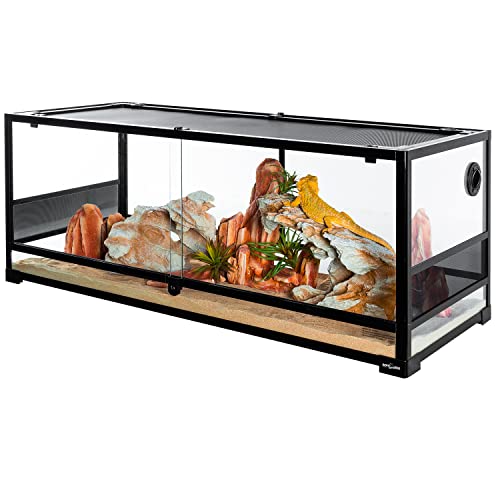
REPTI ZOO Extra-Long 48-inch Glass Terrarium
A roomy front-opening enclosure that suits a dragon for life.

Zoo Med T5 HO ReptiSun 10.0 UVB Lamp (2-Pack)
The standard UVB bulb every dragon needs for healthy bones.

BN-LINK Reptile Thermostat Temperature Controller
Keeps your basking heat safe and steady, day in and day out.

Zoo Med Reptile Calcium with Vitamin D3
Dust feeders to prevent metabolic bone disease in your dragon.
As an Amazon Associate we earn from qualifying purchases at no extra cost to you. Feeding and supplement guidance here is researched care information, not veterinary advice; confirm dosing with a reptile vet.
The complete supply checklist
| Category | Items |
|---|---|
| Enclosure | 40-gallon minimum, 75 to 120 gal better; screen top; secure doors |
| UVB | T5 HO 10.0 linear bulb, fixture, reflector |
| Heat | Basking bulb, dome fixture, thermostat, optional ceramic emitter |
| Monitoring | Digital probe thermometers, digital hygrometer |
| Substrate | Tile or reptile carpet |
| Decor | Two or more hides, basking platform, climbing branch, plants |
| Feeding | Shallow food and water dishes, feeder insects |
| Supplements | Plain calcium, calcium with D3, multivitamin |
Enclosure
Start with the right home. An adult needs a 40-gallon-breeder minimum, with 75 to 120 gallons or a 4x2x2 foot footprint being far better since floor space matters more than height. A front-opening design makes maintenance and handling easier, and a secure screen top supports lighting while preventing escapes. Buying a large enclosure once saves you from upgrading later, so size up if you can.
UVB and heat
These two systems keep your dragon physically healthy. A T5 HO 10.0 linear UVB bulb lets the dragon make vitamin D3 and absorb calcium, so it is non-negotiable; mount it at the warm end and replace it every 6 to 12 months. A basking bulb creates the 95 to 110F basking spot, and a thermostat keeps that heat from running away. Add a ceramic heat emitter only if your room drops below the mid 60s at night.
Bearded Dragon Care Planner
Track your bearded dragon's health, meds, vet visits, mobility, nutrition, and quality of life, all in one printable planner.
Monitoring tools
You cannot manage what you cannot measure. Use digital probe thermometers at the basking surface and cool side, and a digital hygrometer to keep humidity at 30 to 40 percent. Skip stick-on dial gauges, which are inaccurate. Reliable readings let you confirm the basking spot is 95 to 110F, the cool side is 75 to 85F, and the air is dry enough, which is the difference between a setup that looks right and one that truly is.
Substrate and decor
Use a solid substrate like tile or reptile carpet, especially for babies, to eliminate impaction risk. Add at least two hides, one on the warm side and one on the cool side, so your dragon always feels secure. A basking platform raises the dragon closer to the heat and UVB, climbing branches add enrichment, and artificial or safe live plants provide cover that reduces stress and glass surfing.
Food, dishes, and supplements
Stock staple feeders like dubia roaches or crickets, plus dragon-safe greens and vegetables. Add plain calcium for frequent dusting, calcium with D3, and a multivitamin, following an age-appropriate schedule. Provide a shallow food dish for greens and a shallow water dish. Having food and supplements ready before your dragon arrives means you can feed correctly from the very first day.
Final setup steps
Assemble everything, then run the lights and heat for a few days while you fine-tune temperatures and humidity before the dragon moves in. Confirm the basking spot, cool side, and humidity all read correctly, check that hides and platforms are stable, and make sure the enclosure is secure. With the full checklist in place and the habitat dialed in, you are ready to welcome a healthy, happy bearded dragon home.
Editor's Pick · Affiliate link
A T5 10.0 UVB Fixture, the One Thing You Cannot Skip
Metabolic bone disease is the most common preventable illness in captive bearded dragons, and it comes down to inadequate UVB. A linear T5 tube across the basking side does what a coil bulb cannot, and the tube needs replacing roughly annually even when it still lights up.
Frequently Asked Questions
What supplies do I need before bringing home a bearded dragon?
Before your dragon arrives you need the full setup running and stable: an enclosure of at least 40 gallons, a T5 HO 10.0 UVB bulb and fixture, a basking bulb, a thermostat, digital thermometers and a hygrometer, solid substrate like tile or carpet, hides, a basking platform, food and water dishes, calcium and multivitamin supplements, and feeder insects. Set everything up and confirm the basking spot hits 95 to 110F a few days early, so the habitat is correct from the first hour.
How much do bearded dragon supplies cost to start?
A complete starter setup typically runs a few hundred dollars once you add the enclosure, UVB, heat, thermostat, thermometers, substrate, decor, dishes, and supplements. The enclosure and lighting are the biggest line items. You can save by buying a larger tank once instead of upgrading later, and by choosing tile over repeatedly replaced carpet. Avoid cutting corners on UVB and a thermostat, since those protect your dragon's health and safety and are not the place to economize.
What is the most important item on the checklist?
The UVB bulb is arguably the most important single item, because without proper UVB a dragon cannot make vitamin D3 or absorb calcium and will develop metabolic bone disease. A strong T5 HO 10.0 linear bulb at the correct distance is non-negotiable. Close behind are correct basking heat and a thermostat to control it. The enclosure, substrate, and decor matter, but lighting and heat are what keep a dragon physically healthy, so prioritize them.
Do I need a thermostat for a bearded dragon?
A thermostat is strongly recommended because it keeps your heat source from overheating the enclosure and holds the basking spot in the safe range automatically. Without one, a hot day or a fresh bulb can push temperatures dangerously high. Plug your basking bulb or ceramic emitter into a reptile thermostat and set it to maintain your target. It is an inexpensive safeguard that prevents overheating and gives you peace of mind, especially while you are away from home.
What thermometers and gauges do I need?
Use a digital probe thermometer to measure the basking surface, a second to check the cool side, and a digital hygrometer to track humidity at 30 to 40 percent. Avoid stick-on dial gauges, which are inaccurate and can lead you to set temperatures wrong. Accurate readings at the exact spots your dragon uses are essential for dialing in the basking spot at 95 to 110F and the cool side at 75 to 85F. Reliable gauges are cheap insurance for good husbandry.
What food and supplements should be on the checklist?
Stock staple feeder insects like dubia roaches or crickets, plain calcium powder, calcium with D3, and a reptile multivitamin, plus a supply of dragon-safe greens and vegetables. Babies eat mostly insects with frequent calcium dusting, while adults eat mostly greens with occasional insects. Have a shallow food dish and a shallow water dish too. Buying supplements and a first batch of feeders before your dragon arrives means you can feed correctly from day one.
Need more help with your bearded dragon?
Browse our guides by topic to find practical solutions.
Wellness Planner: $39