Feeder Insects Guide for Bearded Dragons
A complete feeder insect guide for bearded dragons: staples vs treats, sizing to prevent impaction, gut loading, dusting, and how many insects to feed at each age.
Feeder insects are the protein engine of a bearded dragon's diet, and choosing the right ones matters more than most beginners realize. Not all bugs are equal: some are clean, nutritious staples you can feed regularly, while others are fatty treats best saved for special occasions. This guide explains which insects belong in each category, how to size them safely, and how gut loading and dusting turn a plain bug into a complete meal.
Top Feeder Insects and Supplies

Dubia Roaches 100 Large Dubia Roaches
Clean, quiet, high-protein staple that does not smell or climb glass.

Josh's Frogs Live Banded Crickets (500 ct)
Active prey that triggers a strong feeding response.

Fluker's Live Black Soldier Fly Larvae (500 ct)
Naturally calcium-rich staple, no dusting needed.
As an Amazon Associate we earn from qualifying purchases at no extra cost to you. Feeding and supplement guidance here is researched care information, not veterinary advice; confirm dosing with a reptile vet.
Staple feeders vs treat feeders
The most useful way to think about feeder insects is to split them into two groups. Staples are nutritionally balanced enough to make up the bulk of the insect portion of the diet. Treats are too fatty, too rich, or too poorly balanced to feed often, so they rotate in for variety and enrichment.
The staples
- Dubia roaches. The gold-standard staple. They have an excellent protein-to-fat ratio, a decent calcium balance, do not smell, do not climb smooth surfaces, and cannot fly. Easy to gut-load and keep.
- Crickets. The classic staple, cheap and widely available, and their movement triggers a strong feeding response. The downsides are smell, noise, and a tendency to escape, but nutritionally they are a solid daily feeder.
- Black soldier fly larvae (BSFL). Also sold as Phoenix worms or calci-worms. These are naturally high in calcium with a good calcium-to-phosphorus ratio, so they are one of the few feeders you do not strictly need to dust. A great staple, especially for babies.
The treats
- Superworms. Larger and fattier than mealworms, good as an occasional treat for juveniles and adults, but too rich and too big for babies.
- Hornworms. Soft, hydrating, and low in fat, excellent for tempting a picky eater or boosting hydration, but low in other nutrients, so they stay a supplement rather than a staple.
- Waxworms. Very high in fat, almost like candy. Use sparingly to fatten an underweight dragon or as a rare reward.
- Mealworms. Tough exoskeleton and a poor calcium balance make these a poor choice for regular feeding, especially for young dragons.
Sizing insects to prevent impaction
The most important safety rule with feeder insects is sizing. The benchmark every keeper should memorize is this: never feed an insect larger than the space between your dragon's eyes. An insect that is too long or too wide can fail to digest properly and cause impaction, a blockage that can lead to paralysis of the back legs or death. Baby dragons need small or even pinhead crickets and small dubia. As your dragon grows, the safe feeder size grows with it. When you are unsure, always pick the smaller option.
Gut loading: feeding your feeders
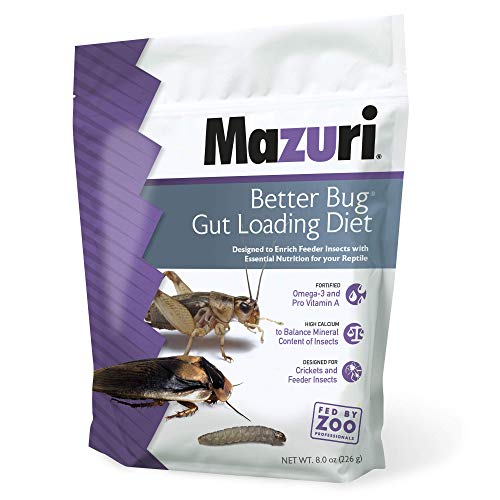
A feeder insect is only as nutritious as what it has recently eaten. Insects shipped from a supplier are often hungry and nutritionally empty. Gut loading fixes this. For 24 to 48 hours before you feed them to your dragon, keep your insects in a ventilated container with a quality commercial gut-load diet plus fresh vegetables like collard greens, squash, and carrot. A well-fed insect passes those nutrients straight to your dragon. Skipping gut loading means feeding mostly empty shell.
Bearded Dragon Care Planner
Track your bearded dragon's health, meds, vet visits, mobility, nutrition, and quality of life, all in one printable planner.
Dusting with calcium and vitamins
Dusting is the second half of supplementing. Place your insects in a small bag or cup, add a light pinch of supplement powder, and gently shake to coat them before offering. Follow this schedule:
- Calcium at nearly every insect feeding. Use calcium without D3 if your dragon has strong T5 HO 10.0 UVB, or calcium with D3 if UVB is weak or absent.
- Multivitamin once or twice a week. On those feedings, dust with a reptile multivitamin instead of plain calcium.
BSFL are the exception, since their natural calcium content is high enough that dusting is optional. For every other feeder, dusting plus gut loading is what keeps bones strong and prevents metabolic bone disease.
How much and how often
Match insect frequency to age. Babies eat insects two to three times a day, taking as many small feeders as they want in a 10 to 15 minute window. Juveniles eat insects once or twice a day. Adults need insects only two to three times a week, since their diet should be about 80 percent plants. Always remove uneaten crickets after a feeding, because loose crickets can nibble a sleeping dragon and stress it overnight. Offer fresh greens daily at every age alongside the insect schedule, and your dragon will get the balanced, complete diet it needs to thrive.
Editor's Pick · Affiliate link
A T5 10.0 UVB Fixture, the One Thing You Cannot Skip
Metabolic bone disease is the most common preventable illness in captive bearded dragons, and it comes down to inadequate UVB. A linear T5 tube across the basking side does what a coil bulb cannot, and the tube needs replacing roughly annually even when it still lights up.
Frequently Asked Questions
What are the best feeder insects for bearded dragons?
Dubia roaches and crickets are the two best staple feeders because they have a good protein-to-fat ratio, are easy to gut-load, and have a reasonable calcium balance. Black soldier fly larvae are an excellent staple too, since they are naturally high in calcium. Treat insects like superworms, hornworms, and waxworms are fattier or richer and should be offered occasionally rather than daily.
How big should feeder insects be for my bearded dragon?
Never feed an insect larger than the space between your dragon's eyes. This is the single most important sizing rule, because an oversized feeder can cause impaction, a dangerous blockage in the gut. Baby dragons need small crickets or small dubia, while adults can take larger feeders. When in doubt, choose the smaller size, since many small insects are safer than a few big ones.
Do I need to gut-load and dust feeder insects?
Yes, both. Gut loading means feeding your insects nutritious food for 24 to 48 hours before offering them, which turns them into a vitamin-rich meal instead of an empty shell. Dusting means coating insects in calcium powder right before feeding, and adding a multivitamin once or twice weekly. Together, gut loading and dusting prevent metabolic bone disease and nutritional deficiencies.
Can bearded dragons eat mealworms?
Adult dragons can have mealworms occasionally, but they are not a good staple. Mealworms have a tough chitin exoskeleton that is harder to digest and a poor calcium-to-phosphorus ratio. They are also fatty. Avoid them for babies and juveniles, whose growing bodies need easier-to-digest, better-balanced feeders like dubia roaches, crickets, or black soldier fly larvae.
How many insects should a bearded dragon eat?
Offer as many appropriately sized insects as your dragon eats in about 10 to 15 minutes, then remove the rest. Babies may eat 25 to 50 small insects per day across multiple feedings, juveniles somewhat fewer, and adults only a small portion two to three times a week. Let appetite and body condition guide you, and never leave loose crickets in the tank overnight.
Can I feed wild-caught insects to my bearded dragon?
No. Wild-caught insects can carry pesticides, herbicides, parasites, or diseases that can seriously harm your dragon. Fireflies are especially dangerous and can be fatal. Always buy feeder insects from a reputable supplier or breed your own, and never collect bugs from your yard or use ones that may have contacted lawn chemicals.
Need more help with your bearded dragon?
Browse our guides by topic to find practical solutions.
Wellness Planner: $39