Why You Can't House Two Bearded Dragons Together
Why bearded dragons must live alone: territorial aggression, basking and food competition, stress, injury, and the signs to watch for, plus how to separate safely.
It is tempting to think a bearded dragon would be happier with a friend, and pet store displays full of dragons crowded together reinforce the idea. The truth is the opposite. Bearded dragons are solitary, territorial reptiles, and housing two together is one of the most common and dangerous mistakes new keepers make. This guide explains why, what goes wrong, and how to keep your dragons safe.
Single-Dragon Setup Essentials
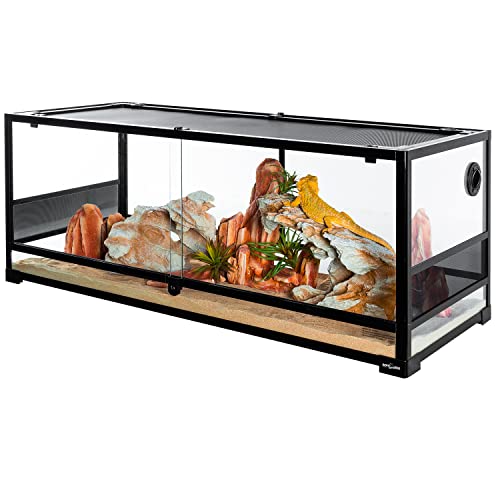
REPTI ZOO Extra-Long 48-inch Glass Terrarium
A roomy single-dragon enclosure so each dragon gets its own proper home.

Herture 40 Gallon Reptile Terrarium with Cabinet
A second enclosure with storage so you can separate dragons safely.

Zoo Med T5 HO ReptiSun 10.0 UVB Lamp (2-Pack)
A UVB tube for each enclosure so no dragon is blocked from UV by a tankmate.

Niteangel Bearded Dragon Hammock Lounger
Enrichment for a solitary dragon, who needs space and stimulation, not a tankmate.
As an Amazon Associate we earn from qualifying purchases at no extra cost to you. Feeding and supplement guidance here is researched care information, not veterinary advice; confirm dosing with a reptile vet.
The bottom line
Keep one bearded dragon per enclosure. This is not a strong preference, it is the safe, well-established standard among experienced keepers and reptile veterinarians. Dragons do not bond, do not get lonely, and do not benefit from a companion. What looks like cuddling is usually one dragon dominating the basking spot while the other is forced into the shade. Cohabitation routinely causes stress, illness, injury, and death, and it is entirely avoidable.
Why cohabitation fails
| Problem | What happens |
|---|---|
| Basking competition | Dominant dragon claims the hot spot, leaving the other cold |
| UVB blocking | One dragon stacks on top of the other, blocking its UV |
| Food competition | Stronger dragon eats first and most, the other goes hungry |
| Chronic stress | Constant tension suppresses appetite and immunity |
| Injury | Bites cost toes, tail tips, and worse |
Territory is hardwired
In the wild, bearded dragons defend basking sites because access to the sun decides whether they digest food, make vitamin D3, and stay healthy. That instinct does not switch off in captivity. A dragon sees any tankmate as a rival for the most valuable resources in the enclosure: heat, UVB, and food. Dominance displays like head bobbing, beard puffing, and arm waving are how dragons negotiate this competition. Because the drive is innate, taming and handling do not make two dragons safe to house together.
Why females and babies are not exceptions
Many people assume two females or two babies will get along, but neither is safe. Females still compete for basking and food, and one will dominate the other, leaving the subordinate stressed and undernourished. Babies are even more fragile: competition for food during a critical growth window, plus nipped toes and tails, can cause lasting harm. Breeders may raise clutches together briefly, but for a pet keeper the right move is separate enclosures from day one.
Bearded Dragon Care Planner
Track your bearded dragon's health, meds, vet visits, mobility, nutrition, and quality of life, all in one printable planner.
The signs of trouble
If two dragons are already sharing a tank, watch for one always on the basking spot while the other hides, darkened stress beards, reduced appetite, weight loss, glass surfing, one dragon stacking on top of the other, and any bite wounds or missing toes and tail tips. Subordinate dragons often suffer quietly, becoming withdrawn and sick before any obvious fight. Any of these signs means you should separate the dragons immediately.
How to separate safely
If you have two dragons together, set up a second complete enclosure with its own basking heat, UVB, hides, and substrate, and move one dragon in right away. Each dragon needs the full setup: at least a 40-gallon-breeder, a 95 to 110F basking spot, a 75 to 85F cool side, and proper UVB. A solid divider is only a short-term stopgap, not a real solution, since dragons can still see each other and stress. Two complete, separate homes is the goal.
Our recommendation
Never house two bearded dragons together, regardless of sex, age, or how peaceful they seem. They are solitary animals that thrive alone in a properly sized, well-equipped enclosure. Give each dragon its own home, dial in heat and UVB, offer enrichment like hammocks and climbing decor, and spend time interacting with your dragon yourself. A single, well-cared-for dragon is a healthy, content dragon, and separating cohabiting dragons is one of the most important things you can do for their welfare.
Deciding on a specific model? We review the REPTIZOO 120 Gallon 2-in-1 terrarium review in full.
Editor's Pick · Affiliate link
A T5 10.0 UVB Fixture, the One Thing You Cannot Skip
Metabolic bone disease is the most common preventable illness in captive bearded dragons, and it comes down to inadequate UVB. A linear T5 tube across the basking side does what a coil bulb cannot, and the tube needs replacing roughly annually even when it still lights up.
Frequently Asked Questions
Can two bearded dragons live together?
No, two bearded dragons should not be housed together. They are solitary, territorial reptiles that do not need or seek companionship, and cohabitation regularly leads to stress, bullying, injury, and even death. A dominant dragon will outcompete the other for the basking spot, food, and UVB, leaving the subordinate weaker and sicker. Even pairs that seem peaceful are often masking chronic stress. The safe, evidence-based recommendation is one dragon per enclosure, always.
Why are bearded dragons so territorial?
Bearded dragons evolved as solitary animals that defend basking sites and territory in the wild, where the best sun spot can mean the difference between health and illness. In captivity those instincts remain, so a dragon sees a tankmate as competition for heat, light, and food rather than a friend. Dominance displays like head bobbing, beard puffing, and arm waving are part of this territorial behavior. Because the drive is hardwired, no amount of taming makes cohabitation safe.
Can two female bearded dragons be housed together?
No, even two females should not be housed together. While males are the most obviously aggressive, females also compete for basking spots, food, and territory, and one will usually dominate the other. The subordinate female often becomes stressed, eats less, gets less UVB, and may be injured. Sex does not remove the territorial drive, so the one-dragon-per-enclosure rule applies to females, males, and mixed pairs alike. Keep each dragon in its own setup.
What are the signs of stress when bearded dragons are housed together?
Watch for one dragon always claiming the basking spot while the other hides or sits in a cooler corner, stress marks or darkened beards, reduced appetite, weight loss, glass surfing, missing toes or tail tips, bite wounds, and one dragon stacking on top of the other to block its UVB. Subtler signs include a normally bold dragon becoming withdrawn. Any of these means the dragons must be separated immediately into individual enclosures before serious harm occurs.
Do bearded dragons get lonely living alone?
No, bearded dragons do not get lonely. They are solitary by nature and do not form social bonds with other dragons, so living alone is not deprivation but their normal, preferred state. What a dragon needs is a properly sized enclosure, correct heat and UVB, a varied diet, enrichment, and gentle interaction with you. Trying to give a dragon a companion does the opposite of helping and introduces serious risk. One healthy, well-kept dragon is a happy dragon.
Can baby bearded dragons be kept together?
It is best not to house baby bearded dragons together. Although breeders sometimes raise clutches in groups temporarily, cohabitating babies can lead to competition for food, stress, nipped toes and tails, and in extreme cases bullying or worse. Smaller dragons are especially vulnerable. If you bring home siblings or two babies, set them up in separate enclosures from the start. It is safer and prevents one dragon from outcompeting and harming the other during a critical growth period.
Need more help with your bearded dragon?
Browse our guides by topic to find practical solutions.
Wellness Planner: $39