Glass vs PVC Enclosure for Bearded Dragons
Glass vs PVC bearded dragon enclosures compared: heat retention, running cost, glass surfing, weight, humidity, and viewing, with a clear recommendation for each keeper.
Choosing between a glass tank and a PVC enclosure is one of the first big decisions a bearded dragon keeper makes, and it shapes your running costs, your temperatures, and even your dragon's behavior. Both materials can house a healthy dragon, but they behave very differently. This guide breaks down heat retention, cost, viewing, glass surfing, weight, and humidity so you can pick with confidence.
Enclosure and Heat Picks

Herture 40 Gallon Reptile Terrarium with Cabinet
A glass starter enclosure with sliding doors and a storage stand, good for juveniles or budget builds.
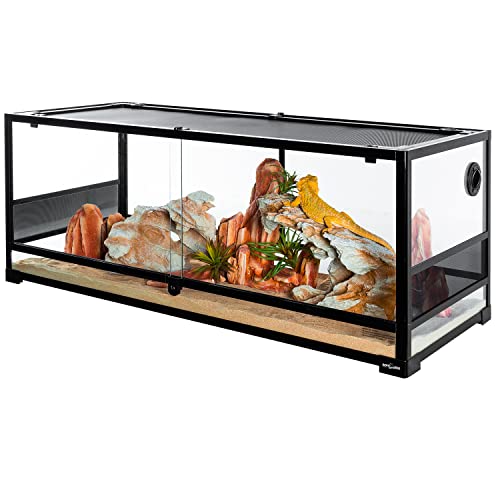
REPTI ZOO Extra-Long 48-inch Glass Terrarium
A 4-foot front-opening glass tank that gives an adult the floor space it needs.

Zoo Med T5 HO ReptiSun 10.0 UVB Lamp (2-Pack)
The standard UVB bulb for either material; place at the correct distance per the bulb chart.

BN-LINK Reptile Thermostat Temperature Controller
Keeps heat steady in glass or PVC so your basking spot stays in the safe range.
As an Amazon Associate we earn from qualifying purchases at no extra cost to you. Feeding and supplement guidance here is researched care information, not veterinary advice; confirm dosing with a reptile vet.
Glass vs PVC at a glance
| Factor | Glass | PVC |
|---|---|---|
| Heat retention | Poor, loses heat through every wall | Excellent, insulates well |
| Running cost | Higher wattage needed | Lower, holds heat with less power |
| Upfront price | Lower | Higher |
| Glass surfing | More common, reflective walls | Less common, solid sides |
| Weight | Heavy and fragile | Lightweight, durable |
| Viewing | Clear on all sides | Front panel only |
| Humidity control | Vents quickly, very dry | Slightly higher retention |
Heat retention and running cost
The single biggest practical difference is insulation. Glass conducts heat, so warmth escapes through all four walls and the screen top. To hold a 95 to 110F basking spot and a 75 to 85F cool side in a typical room, a glass tank usually needs higher wattage bulbs and works harder in a cold house. PVC is an insulating plastic, so a PVC enclosure traps heat and maintains a stable gradient with less power. Over the years of a dragon's life, that lower wattage adds up to real savings, and it makes hitting your target temperatures far less fiddly.
Glass surfing and stress
Glass surfing is the frantic scratching you see when a dragon stands on its back legs and paws at the glass. It has many causes, including a tank that is too small, stress, and temperature problems, but transparent walls play a role. In a glass tank a dragon sees its reflection and the whole room through every side, which can trigger territorial or escape behavior. A PVC enclosure has opaque solid sides and only a clear front, so most of those visual triggers disappear. If you already own glass, covering three sides with background film often reduces surfing noticeably.
Bearded Dragon Care Planner
Track your bearded dragon's health, meds, vet visits, mobility, nutrition, and quality of life, all in one printable planner.
Weight, durability, and setup
A 4-foot glass terrarium is heavy, awkward to move, and can crack if knocked. PVC panels are light, screw together, and shrug off the humidity swings that can warp wood and rust metal. PVC also resists scratches from substrate and cleaning. Glass scratches less but shatters more. If you rearrange your home often, move frequently, or want something a single person can lift, PVC has a clear edge.
Viewing and aesthetics
Here glass wins. Clear panes on every side give you edge-to-edge visibility and let light into the enclosure, which can make a display setup look brighter and more open. PVC restricts viewing to the front panel, which is great for the dragon's sense of security but less of a showpiece. If your enclosure sits in the middle of a room or you simply love watching from every angle, glass is the more attractive option.
Humidity and ventilation
Bearded dragons are arid animals that need 30 to 40 percent humidity. Glass tanks with full screen tops vent moisture fast and stay very dry, which suits them well, though in winter the air can get too dry. PVC holds a touch more humidity, which is helpful in bone-dry climates but means you may need extra vents in a humid one. Either way, track the reading with a digital hygrometer and adjust ventilation as needed.
Our recommendation
For a lifelong adult setup, PVC is the better choice for most keepers: it holds heat, costs less to run, weighs less, and reduces glass surfing. Choose glass if your priority is the lowest upfront price or full all-around viewing, and you are comfortable using slightly higher wattage and covering a few sides to manage behavior. Whichever you pick, give your dragon at least a 40-gallon-breeder footprint, dial in the temperature gradient, and use the correct T5 HO 10.0 UVB. The husbandry inside the box matters far more than the box itself.
Deciding on a specific model? We review the REPTIZOO 120 Gallon 2-in-1 terrarium review, REPTIZOO 120 gallon tall and wide terrarium review and Unipaws 50 gallon reptile tank review in full.
Editor's Pick · Affiliate link
A T5 10.0 UVB Fixture, the One Thing You Cannot Skip
Metabolic bone disease is the most common preventable illness in captive bearded dragons, and it comes down to inadequate UVB. A linear T5 tube across the basking side does what a coil bulb cannot, and the tube needs replacing roughly annually even when it still lights up.
Frequently Asked Questions
Is glass or PVC better for a bearded dragon?
For most keepers a PVC enclosure is the better long-term choice because it holds heat and stays warmer with less wattage, which makes hitting a 95 to 110F basking spot easier and cheaper to run. Glass is fine too, especially for beginners on a budget, but it loses heat through every wall and can cause more glass surfing. If you want the easiest temperatures and best insulation, choose PVC; if you want the lowest upfront cost and clear all-around viewing, choose glass.
Does a glass tank cause bearded dragon glass surfing?
Glass enclosures can contribute to glass surfing because the dragon sees its own reflection or the room beyond all four walls and may scratch at the barrier. PVC enclosures have solid opaque sides and only a front viewing panel, which removes most of those reflections and visual stress. Glass surfing usually has several causes, including stress, temperature, and a tank that is too small, but reducing see-through walls with PVC or by covering glass sides often helps a lot.
Do PVC enclosures hold heat better than glass?
Yes. PVC is an insulating material, so a PVC enclosure traps warmth and keeps a stable gradient with lower wattage bulbs. Glass conducts heat outward through every pane, so a glass tank needs more heat input to hold the same basking temperature and can develop cold spots near the walls in a cool room. If your home runs cold, PVC will save you money on bulbs and make it far easier to keep the cool side above the safe overnight range.
Are PVC enclosures worth the extra money?
For a lifelong adult setup, many keepers feel PVC is worth it. The higher upfront price is offset by lower running costs, easier temperature control, lighter weight, and better resistance to humidity warping. PVC panels also screw together and often ship flat-packed. Glass wins purely on initial price and edge-to-edge visibility. If budget is the deciding factor right now, a quality glass terrarium will still raise a healthy dragon as long as the temperatures and UVB are correct.
What size enclosure does a bearded dragon need in glass or PVC?
Regardless of material, an adult bearded dragon needs a 40-gallon-breeder minimum, with 75 to 120 gallons or a 4x2x2 foot footprint being much better. Floor space matters more than height because dragons are ground-dwelling baskers, not climbers. Babies can start in a 40-gallon or be raised in a larger enclosure with clutter to help them feel secure. Whether you pick glass or PVC, prioritize length and width so your dragon has room to thermoregulate end to end.
Can you keep humidity controlled in glass and PVC tanks?
Both materials let you keep the 30 to 40 percent humidity bearded dragons need, but the screen top matters most. A full screen top, common on glass tanks, vents moisture quickly and keeps the air dry, which suits arid dragons. PVC enclosures with partial tops can hold slightly more humidity, so you may need extra ventilation in a humid climate. Always track humidity with a digital hygrometer and adjust ventilation, water bowl placement, and misting accordingly.
Need more help with your bearded dragon?
Browse our guides by topic to find practical solutions.
Wellness Planner: $39