Baby vs Adult Bearded Dragon Care
Baby vs adult bearded dragon care compared: diet ratios, feeding frequency, tank size, basking temps, and calcium needs, with clear guidance for every life stage.
A bearded dragon's needs change a lot as it grows from a tiny hatchling into a full-sized adult. The enclosure and UVB stay broadly the same, but diet, feeding frequency, and supplementation shift dramatically. Knowing what changes and when helps you raise a healthy, well-proportioned dragon and avoid common mistakes like overfeeding insects to an adult. This guide compares baby and adult care side by side.
Care Essentials by Age

Zoo Med Reptile Calcium with Vitamin D3
Frequent calcium dusting is critical for fast-growing babies and juveniles.

Dubia Roaches 100 Live Dubia Roaches
A protein-rich staple feeder for the insect-heavy diet babies and juveniles need.

Zoo Med T5 HO ReptiSun 10.0 UVB Lamp (2-Pack)
Strong UVB at every age so dragons can use the calcium they eat.
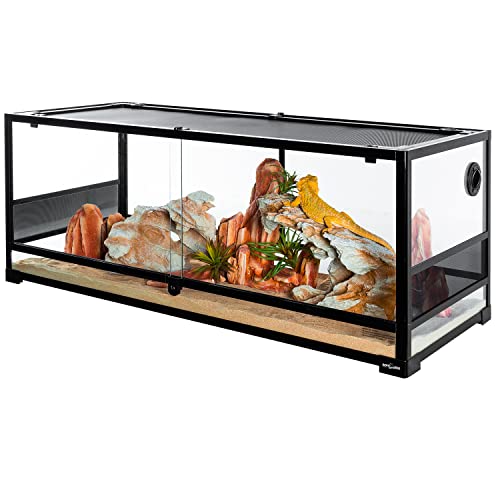
REPTI ZOO Extra-Long 48-inch Glass Terrarium
A roomy enclosure that suits a cluttered baby setup and an adult dragon alike.
As an Amazon Associate we earn from qualifying purchases at no extra cost to you. Feeding and supplement guidance here is researched care information, not veterinary advice; confirm dosing with a reptile vet.
Baby vs adult at a glance
| Factor | Baby / Juvenile | Adult |
|---|---|---|
| Diet ratio | ~80% insects, 20% greens | ~80% greens, 20% insects |
| Feeding frequency | Insects several times daily | Insects a few times weekly |
| Basking temp | Up to ~110F | 95 to 110F |
| Calcium | Almost every feeding | Less frequent |
| Tank size | 40 gal with clutter, or larger | 40 gal minimum, 75 to 120 better |
| Growth | Rapid | Stable |
Diet: the biggest change
Babies are growing machines and need protein. A young dragon's diet is roughly 80 percent insects and 20 percent greens, with insects offered multiple times a day. As the dragon matures, that ratio flips: adults eat mostly plants, about 80 percent greens and vegetables, with insects only a few times a week. Overfeeding insects to an adult is a common mistake that leads to obesity and fatty liver disease, so transition toward greens as growth slows. Offer a varied salad of leafy greens and dragon-safe vegetables daily for adults.
Feeding frequency and portions
For babies, let the dragon eat as many appropriately sized insects as it wants in a 10 to 15 minute session, several times daily, then remove leftovers. Juveniles taper to once or twice a day. Adults need insects only a few times a week, with fresh greens always available. Insect size matters at every age: never offer prey wider than the space between the dragon's eyes, since oversized feeders cause impaction. Adjust portions to your dragon's weight and body condition over time.
Bearded Dragon Care Planner
Track your bearded dragon's health, meds, vet visits, mobility, nutrition, and quality of life, all in one printable planner.
Calcium and UVB
Because babies build their whole skeleton fast, they need frequent calcium. Most keepers dust feeders with plain calcium at nearly every feeding for babies and juveniles, with multivitamin and D3 supplements on a schedule. Adults need calcium less often. None of this works without proper UVB, so run a strong T5 HO 10.0 bulb at the correct distance at every age. Together, calcium and UVB prevent metabolic bone disease, one of the most common and preventable problems in young dragons.
Temperature and housing
Babies bask a touch hotter, often up to around 110F, while adults sit at 95 to 110F. Both need a cool side of 75 to 85F and no nighttime heat if the room stays above the mid 60s. For housing, an adult needs a 40-gallon-breeder minimum and ideally 75 to 120 gallons. A baby can live in a 40-gallon, but many keepers raise babies in a larger enclosure packed with hides, plants, and clutter so the space feels secure and saves an upgrade later.
Handling and growth
Young dragons can be skittish, so handle gently and briefly to build trust as they grow. Track growth and weight to confirm healthy development, and shift the diet toward greens as the dragon approaches adulthood around 12 to 18 months. Watch for warning signs like lethargy, soft jaw, or trembling, which can indicate metabolic bone disease, and consult a reptile vet if anything seems off.
Our recommendation
Match your care to your dragon's life stage. Feed babies an insect-heavy diet several times a day with frequent calcium, then gradually transition to a greens-heavy adult diet with occasional insects. Keep UVB strong and temperatures correct at every age, and house your dragon in a roomy, well-furnished enclosure. Getting the age-appropriate diet right is the single most important thing you can do to raise a strong, long-lived bearded dragon.
Editor's Pick · Affiliate link
A T5 10.0 UVB Fixture, the One Thing You Cannot Skip
Metabolic bone disease is the most common preventable illness in captive bearded dragons, and it comes down to inadequate UVB. A linear T5 tube across the basking side does what a coil bulb cannot, and the tube needs replacing roughly annually even when it still lights up.
Frequently Asked Questions
What is the main difference between baby and adult bearded dragon care?
The biggest differences are diet and feeding frequency. Baby bearded dragons eat mostly insects, roughly 80 percent protein and 20 percent greens, fed several times a day to fuel rapid growth. Adults flip the ratio to about 80 percent plants and 20 percent insects, fed far less often. Babies also bask a little hotter and need careful daily calcium dusting. Housing, UVB strength, and temperature gradients are broadly similar, but the feeding regimen changes dramatically as the dragon matures.
How often should I feed a baby vs an adult bearded dragon?
Feed a baby bearded dragon insects multiple times a day, letting it eat as many properly sized feeders as it wants in a 10 to 15 minute window each session, plus fresh greens daily. Juveniles taper to once or twice daily. Adults eat insects only a few times a week and have greens available every day, since plants become the bulk of the diet. Always remove uneaten insects, dust with calcium, and adjust portions based on your dragon's weight and body condition.
Do baby bearded dragons need a smaller tank?
Not necessarily. While a baby can live in a 40-gallon enclosure, many keepers raise babies in a larger tank with extra clutter, hides, and plants so the space does not feel overwhelming. An adult needs a 40-gallon-breeder minimum, with 75 to 120 gallons being much better. Raising a baby in a larger, well-cluttered enclosure saves you an upgrade later. The key for babies is plenty of hides and cover so they feel secure enough to hunt and bask.
Do babies and adults need different basking temperatures?
They are close, but babies run a little hotter. Juvenile bearded dragons do well with a basking surface up to around 110F to support fast growth and digestion, while adults sit comfortably at 95 to 110F. Both need a cool side of 75 to 85F so they can thermoregulate, and neither needs nighttime heat if the room stays above the mid 60s. Always measure the basking surface with a digital probe thermometer and adjust bulb height or wattage to hit the range.
Why do baby bearded dragons need more calcium?
Babies are building their entire skeleton rapidly, so they need frequent calcium to prevent metabolic bone disease. Most keepers dust feeder insects with plain calcium at almost every feeding for babies and juveniles, alongside proper UVB so the dragon can use that calcium. Adults need calcium less often because growth has slowed. Follow a supplement schedule that matches your dragon's age, pair it with a strong T5 HO 10.0 UVB bulb, and your dragon builds strong, healthy bones.
At what age is a bearded dragon considered an adult?
Bearded dragons are generally considered adults around 12 to 18 months, when growth slows and they reach close to their full length of roughly 18 to 24 inches. The transition is gradual, so shift the diet toward more greens and fewer insects as growth tapers rather than changing overnight. Watch body condition and activity, and let your dragon's development guide the timing rather than the calendar alone. A reptile vet can confirm maturity if you are unsure.
Need more help with your bearded dragon?
Browse our guides by topic to find practical solutions.
Wellness Planner: $39